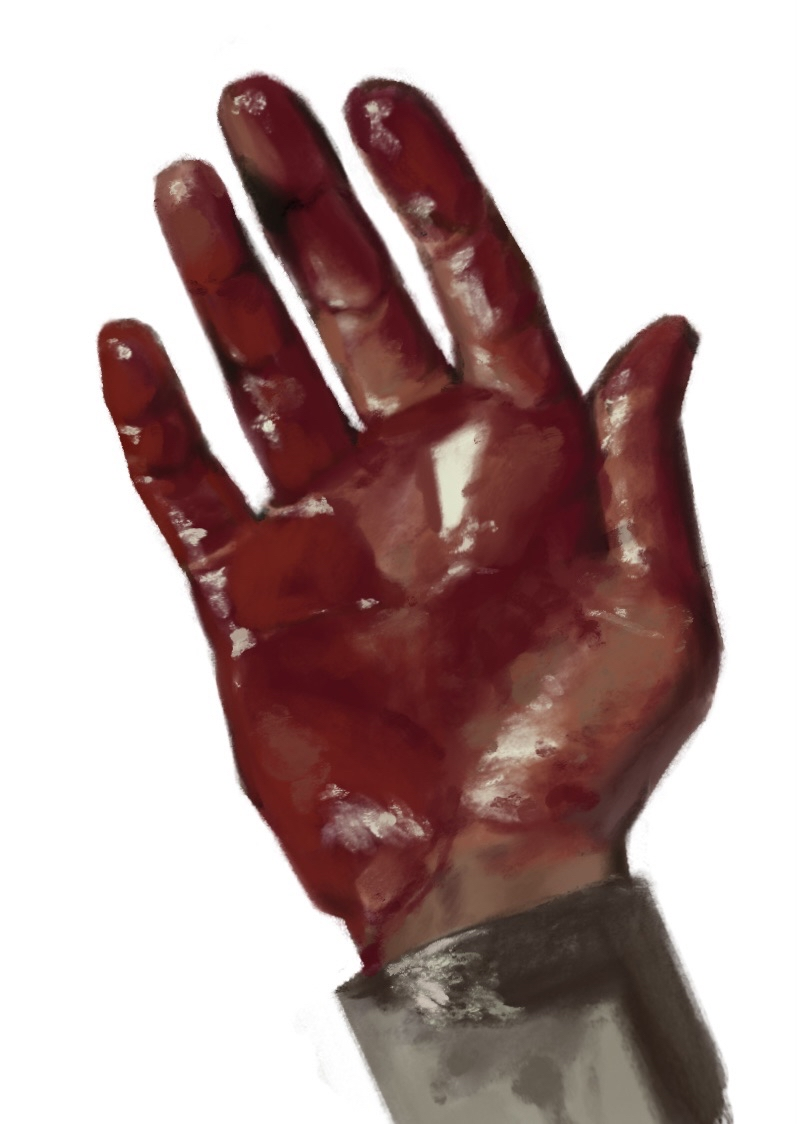
Rawhide
"There is no glory in surviving."
History
He Who Uses Rawhide Well, more commonly known as Rawhide, was born in the winter of 1854 into a Crow band in the Nebraska Territory, later becoming the Montana Territory. From an early age, he displayed remarkable practical skills, crafting tack, bindings, shields, tools, and making repairs, earning him his name. He was a timid and distant child, developing a reputation as a quiet but diligent marksman. By the age of fourteen, he was trusted to ride in small hunting parties and was well respected for his steady aim. However, he worked poorly with others, whether peers or authority. He ignored orders that he deemed unsafe or foolish and was often scolded for his stubbornness.
As a boy, he was sent on a vision quest, expected to return with guidance or, at the very least, some sense of purpose. He endured the fast and the solitude for as long as he could, but nothing came to him. Some said he lacked the strength for proper spiritual discipline, and Rawhide feared they were right.
He frequently argued with one particular leader within his warrior group, whom he considered reckless: his own father. Over the years, their disagreements had grown, usually ending with Rawhide being told that he was too proud for his own good. Before a planned raid against the Lakota, he openly questioned the strategy, urging caution. He believed the raid was foolish and poorly planned, and objected on both strategic and ego-driven grounds. However, he was dismissed once again. Out of spite, Rawhide sought to dishonour his father.
The meeting took place on neutral ground: a winter camp where both tribes sent young men to trade for supplies. His original intention had been to mislead both sides, but when he spoke with the Lakota intermediaries, he realised too late that he was in more danger than he had expected. He was threatened and left shaken. In trying to protect himself, he revealed far more than he intended, warning the Lakota about the upcoming raid. The raid was a tremendous failure, resulting in the deaths of many of his own men. When the path of the ambush was compared to the plans only a few had known, his absence and earlier disputes aligned too easily to ignore, quickly exposing his role as a traitor. While the accusations were spoken by others, it was his father’s silence that condemned him. The shame was enough to push him out. He left his band at the age of seventeen.
In the months following his exile, he found himself glancing west whenever he set up camp, torn between hoping and dreading to see a familiar rider. He cut his hair up to his chin and wandered across the plains for several years, never staying anywhere for long, living off whatever he could trade. He slept in corrals, sheds and lean-tos. Anything to save him from the weather. Near one such place in 1874, he encountered a badly wounded soldier who had been separated from his unit. Rawhide hesitated at the sight of the uniform, but the man, Corporal Winters, was in no state to threaten anyone. Rawhide shared his food, cleaned his wound as best he could and pointed him towards water. When Winters proved too weak to move on, the two of them stayed together for several days. They both spoke little and slept lightly, taking turns without discussing it. Before they parted ways, Winters told Rawhide that the army was looking for men who knew the land and invited him to ride with them if he wished. Rawhide was hesitant about the offer, but eventually accepted as he had nowhere else to go.
After leading Rawhide to the military fort, Cpl. Winters introduced him. An officer asked him where he had learnt to read sign, how far he could ride without resting, and whether he would obey orders he did not like. He was given a place near the picket line, a portion of rations and instructions to ride with a group of other Crow men. His name was written down poorly and mispronounced even worse. By morning, he was riding with them.
Having joined the US Army as a Crow scout, he learned enough English to follow orders, but mostly kept to himself. He fought in the Great Sioux War, during which a shot to the shoulder knocked him from his horse, leaving him conscious but disoriented on the ground. Mistaking him for dead, an enemy began to scalp him, but was driven off when the fighting resumed, leaving Rawhide alive but with a deep scar across his forehead. Although he served well and was a proficient sharpshooter, he refused leadership roles, claiming that he could not be trusted to guide others. After being discharged two years later, he spoke briefly with Cpl. Winters only once more before parting.
 Nebraska Terr. USA
 English
 He continued to wander north for around a month before coming upon a remote cabin. An elderly woman named Hatchet lived there alone, having once shared it with her late husband. He first arrived offering to hunt, split wood, and carry water in exchange for food, and she allowed him to stay after acknowledging his need and competence. The two lived together with little conflict; she taught Rawhide how to read and write, while he helped with the practical labour of the homestead. She was already ill when he arrived, suffering from Bright’s disease, and her strength steadily declined over the following years. Rawhide remained at her side until she quietly passed away one autumn. He buried her on a nearby hillside and stayed in the cabin afterwards.
These days, Rawhide earns a living as a hunter. He sells whatever game he brings down into town, keeping what he needs and trading what is necessary.
Personality
Rawhide rarely goes into town, and the only people who usually speak to him are shopkeepers. Strangers often find him intimidating at first. With his large, rugged physique, he towers over most people, and the scar across his forehead adds to this impression. His expression tends to remain neutral, but his gaze is soft and almost sorrowful. People hesitate to stand near him, but when he does speak, he is polite and straightforward, and sometimes a little awkward. He is especially shy around children and elders.
Rawhide keeps busy with the work around his cabin. He doesn't like routines and finds them difficult to follow. He simply does whatever needs to be done, then spends the rest of the day however feels right at the time. Work tends to keep his mind off things. Not only does he have great hand-eye coordination, but also excellent fine motor skills. In his free time, he carves small wooden animals and figures, displaying the ones he likes and burning the ones he doesn't. He sketches in a leather journal, usually drawing his surroundings: woods, mountains and animals. Sometimes he adds short notes beside the drawings. He prefers to work at dusk or in the early evening. When he is restless, he hums to his horse. He sleeps heavily and often struggles to wake up early, often remaining tired.
Rawhide has an exceptional knowledge of handicrafts. He can repair almost anything made of leather, wood or bone and has made nearly all of the tools he uses. Furthermore, he is fascinated by firearms and has an excellent understanding of their mechanics, even being able to field strip a gun in the dark just for fun. He is steady and eerily precise when aiming, particularly at long-range targets. However, when he misses, he only reacts with a clenched jaw and silence. He refuses duels less out of pacifism and more because he considers them to be pointless performances.
He isn't very concerned about his appearance. He doesn't mind getting his clothes or hands dirty as long as he cleans up afterwards. He dislikes noise and crowds. He feels uneasy with physical contact, whether it's a handshake or a hug. However, he won't decline it when offered, usually out of reluctant politeness.
He can easily become flustered when praised, but deflects compliments with a brief nod or muttered response. When he's upset, he tends to withdraw. During a conflict, his first instinct is to remain calm and avoid escalation, often freezing. However, if he is pushed far enough, he will not hesitate to resort to physical force and will not back down once the line has been crossed. When he fights, there's something that makes him feel vividly alive. The rush leaves him ashamed, but he could never pretend it's not there.
Despite claiming not to care what people think of him, Rawhide remembers details of what peoply say years later. He has no patience for liars, cowards or exploiters, yet he unintentionally speaks harshly to those who fall victim, telling them to stand up for themselves and toughen up. He especially struggles with people who fill the air with noise, often mistaking loudness or constant talking for carelessness rather than nerves or habit. Despite growing uncomfortable when vulnerable, he's deeply concerned about the well-being of those close to him. He never learned to swim; deep water terrifies him and he refuses to go below ankle-height. Additionally, seeing his own reflection makes him terribly distressed and he often avoids mirrors and water reflections. He tries to see himself realistically, but often falls into the belief that his existence carries little meaning, being based on chance rather than purpose. Nonetheless, he longs for connection more than he’s willing to admit, hoping to be understood and acknowledged without having to justify every silence. Deep down, he wishes to one day feel at peace with where he came from, even if he never returns.
Relationships
See Info ▶
Family and Tribe
Rawhide was known and generally respected within his band, though few found him easy to be around. He moved through the camp quietly, seldom pressing for closeness with anyone beyond what was required of him in daily life. His parents were steady and capable people who valued competence and restraint. They entrusted him with responsibility from an early age and expected him to learn when to speak and when to remain silent. He had older siblings, and his place among them was unremarkable. He was neither the favourite nor the troublesome one, but he was present, useful and often watching. When disagreements arose, his father did not raise his voice. He simply stood his ground and expected his son to understand why. However, Rawhide mistook this steadiness for ignorance and only later understood that it had been discipline.
In the days before his exile, his family spoke little. His mother prepared food without comment, his father offered no advice he had not already received, and his siblings avoided meeting his gaze. After he left, there was no public defence and no attempt to call him back. Whatever grief remained was kept private. After he left, his father did not send word. This, more than anything else, told Rawhide that his place had ended.
Corporal Winters
Although Rawhide rarely thought of Cpl. Winters as a friend, the man had become indispensable for a time. Having served in the same unit, Winters was polite, careful and weary, never being one to boast or lecture. While Rawhide acted instinctively and often silently, Cpl. Winters moved deliberately, constantly listening and often commenting. Rawhide came to understand that Cpl. Winters judged competence more than allegiance and trusted him as far as he could carry his own body.
Their 'friendship' was awkward in the quietest sense. They shared meals, watches, tasks and responsibilities, yet neither of them tried to get closer than what was necessary for survival. Winters never pried into Rawhide’s past, and in return, Rawhide never asked questions or offered stories.
When Rawhide left the army, their bond ended as abruptly as it had formed. Cpl. Winters thanked him for saving his life, but there was no sentimentality; it was simply an acknowledgement. They never saw each other again.
Hatchet
Rawhide’s relationship with Hatchet began cautiously and overly polite with an obvious effort on his part to be unobtrusive. He addressed her with care, deferred to her rules, and carried a persistent shyness around even after years had passed. She was observant, practical, and quietly firm, with little patience for foolishness but a steady tolerance for human frailty. She insisted on paying him fairly, even after he continously refused. Hatchet had a habit of correcting him gently but without hesitation, offering instruction whether it concerned reading, mending, or how much rest he was neglecting. She neither pitied him nor pressed him to explain himself, and in her presence Rawhide found a rare sense of ease. Over the years they lived together, they grew to something like grandmother and grandson, sharing stories and laughing together. Intrigued by his Crow heritage and his knowledge of the country, she frequently questioned him about his people and the life he had left behind. She often spoke about her late husband, and Rawhide often spoke about his time wandering the plains.
By the time her health failed, she faced it without drama, but Rawhide stayed without being asked, caring for her, carrying her to bed during her worse days. She was the closest thing to family he had allowed himself since leaving his band. After her death, it left a stillness in his life. He did not cry when she passed, only later, when he was alone.
Le Lapin
When he first met Le Lapin, Rawhide didn’t know what to make of him. He was loud, quick, hard to pin down, and seemed to move through the world like he expected to be chased. Rawhide kept his distance at first. Men like that usually brought trouble. Still, Le Lapin never acted afraid of him, even with the size difference, and that unsettled him more than hostility would have.
Over time, Rawhide realised Le Lapin was always watching. In a restless, measuring way. He talked too much, joked too much, but he had a certain charm he couldn't name. Rawhide didn’t approve of the stealing or the lying, but he also saw that it came from survival, not cruelty. He found himself listening despite himself, noticing when Le Lapin looked tired, dull, or too carefully put together.
Rawhide grew used to him being there. More than that, he began to look forward to it, though he didn’t like admitting that even to himself. He was exhausting, but he made the days feel less long. Somewhere along the way, that familiarity turned into something more intimate. Rawhide became aware of Le Lapin’s body, his voice, the way he leaned too close. The realisation embarrassed him. Wanting another man felt dangerous and wrong, and wanting someone so much smaller made Rawhide worry about what his own strength might mean.
After the river, Rawhide couldn’t think of Le Lapin the same way. What happened there left him shaken and ashamed, not because he hadn’t wanted it, but because he hadn’t stopped it. It forced him to confront how easily he slipped into stillness instead of resistance. He didn’t know whether Le Lapin understood that, or if he’d even noticed. He cared about Le Lapin. He wanted him. But he also didn’t trust himself or the situation.
In time, it settled. There was no formal beginning and no clear agreement, just a gradual narrowing of distance. They began spending nights together, initially out of convenience, then out of habit. Sometimes Le Lapin stayed at the cabin, sometimes Rawhide lingered in town longer than planned. They returned to their old banter, still teasing, still needling, but with less edge to it. Touch became easy and unremarkable. Hands finding shoulders, knees brushing, bodies close without tension. They did not talk much about what they were, and neither asked for more than the other could give. And for both of them, that felt like enough.
Reverend Glasseye
When Rawhide first met the reverend, he expected suspicion or polite distance, the way most people treated him. Instead, the reverend spoke to him plainly, playfully even, without fear and without reverence either. That unsettled Rawhide at first. Men of faith often came with judgment or pity, and the reverend offered neither.
He saw the reverend as observant and persistent in a quiet way. He asked questions without pressing and listened without trying to correct. Rawhide didn’t offer much in return, but the reverend never seemed bothered by that. Over time, Rawhide realised the man remembered details. Small things he had said once and never repeated. That awareness made Rawhide cautious, but it also made him feel, reluctantly, acknowledged.
As they continued to see each other, Rawhide came to understand that the reverend wasn’t trying to save him. Their conversations stayed practical and grounded: work, weather, the state of the town, the people in it. When faith came up, the reverend spoke about it as something he lived with, not something he imposed. Rawhide didn’t share his beliefs, but he respected the steadiness with which the reverend held them.
By the time of the later stories, he didn’t confide deeply or ask for guidance outright. Rawhide trusted that the reverend saw more than he said and would not pry unless invited. And when Rawhide did invite, he appreciated the reverend's honest responses without judgement. The reverend was one of the few people Rawhide felt he could be quiet around without that silence being mistaken for hostility.
Living Conditions
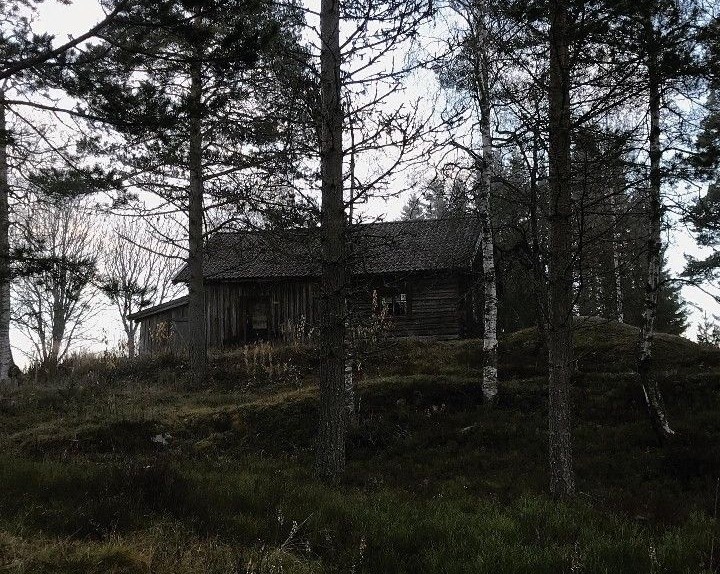
Rawhide lives alone in a sturdy, well-kept cabin around 15 km (9 miles) from the town. The cabin consists of a single main room built of old timber and stone, with a low ceiling, small windows, and a heavy fireplace, as well as a small root cellar. A short distance away downwind is an outhouse. Beside the cabin is a small fenced garden patch with some potatoes, beans, and a few persistend onions growing there. It's maintained very irregularly but never abandoned entirely. Beside it are a few lone hitching posts.
The cabin is located within 250 m (270 yards) of a creek that's used as his main water source. He hauls buckets daily or every few days, boiling it when unsure, especially after heavy rain or thaw. During winter he may have to break ice water or melt snow in emergencies. His day-to-day diet is simple and repetitive with little waste, consisting primarily out of game meat, perserved meat, hard bread or biscuits when flour is available, potatoes, beans and berries during summer, and tea and coffee when he can buy or trade for it.
Inside the cabin are a rough table, work counters, shelves, a wide bed that is still too short for him, and the remaining belongings of the previous homesteaders. Old clothes, books, decorations, and small personal items like a cracked mirror, framed print, and dried flowers. It's a bit cluttered, but lived-in. Rawhide adds little of his own beyond tools, weapons, and carvings, which he displays by a window. While the space can grow messy, he keeps the structure well maintained.
Appearance
NOTE: Some details may sometimes be omitted for the sake of simplification when drawing him.
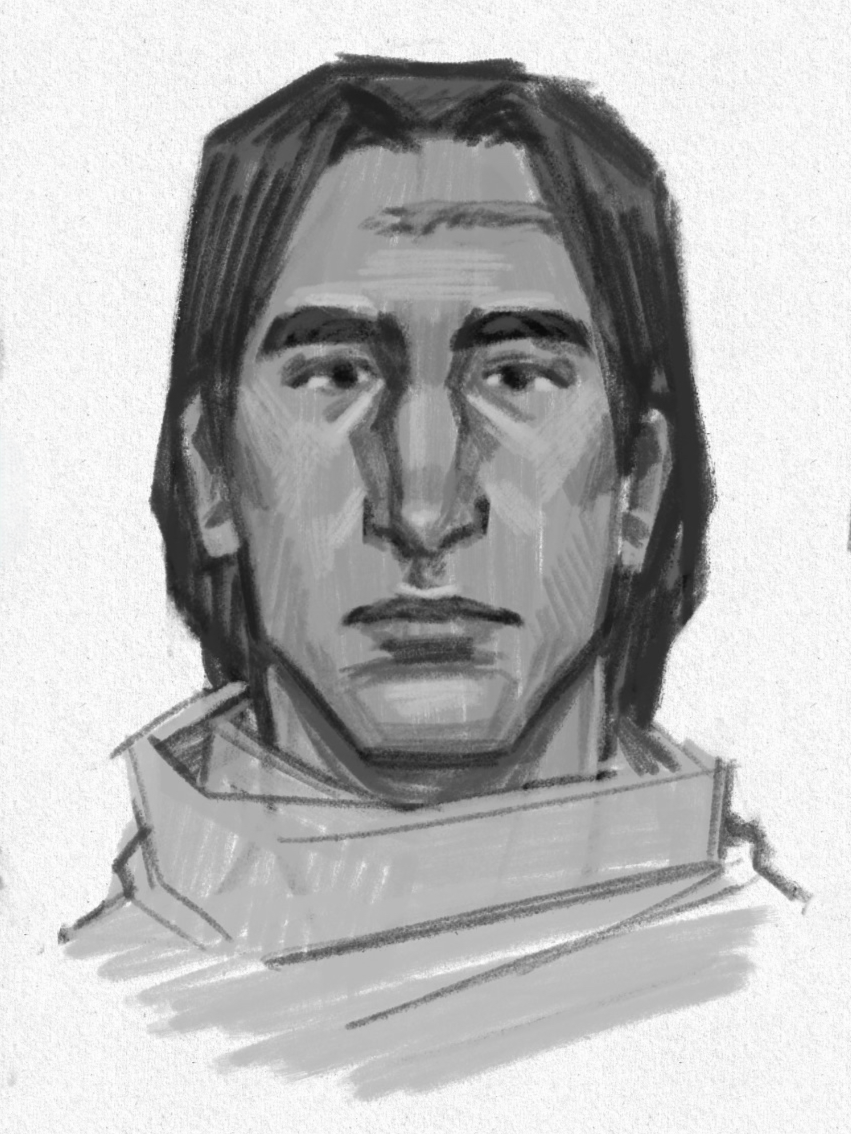
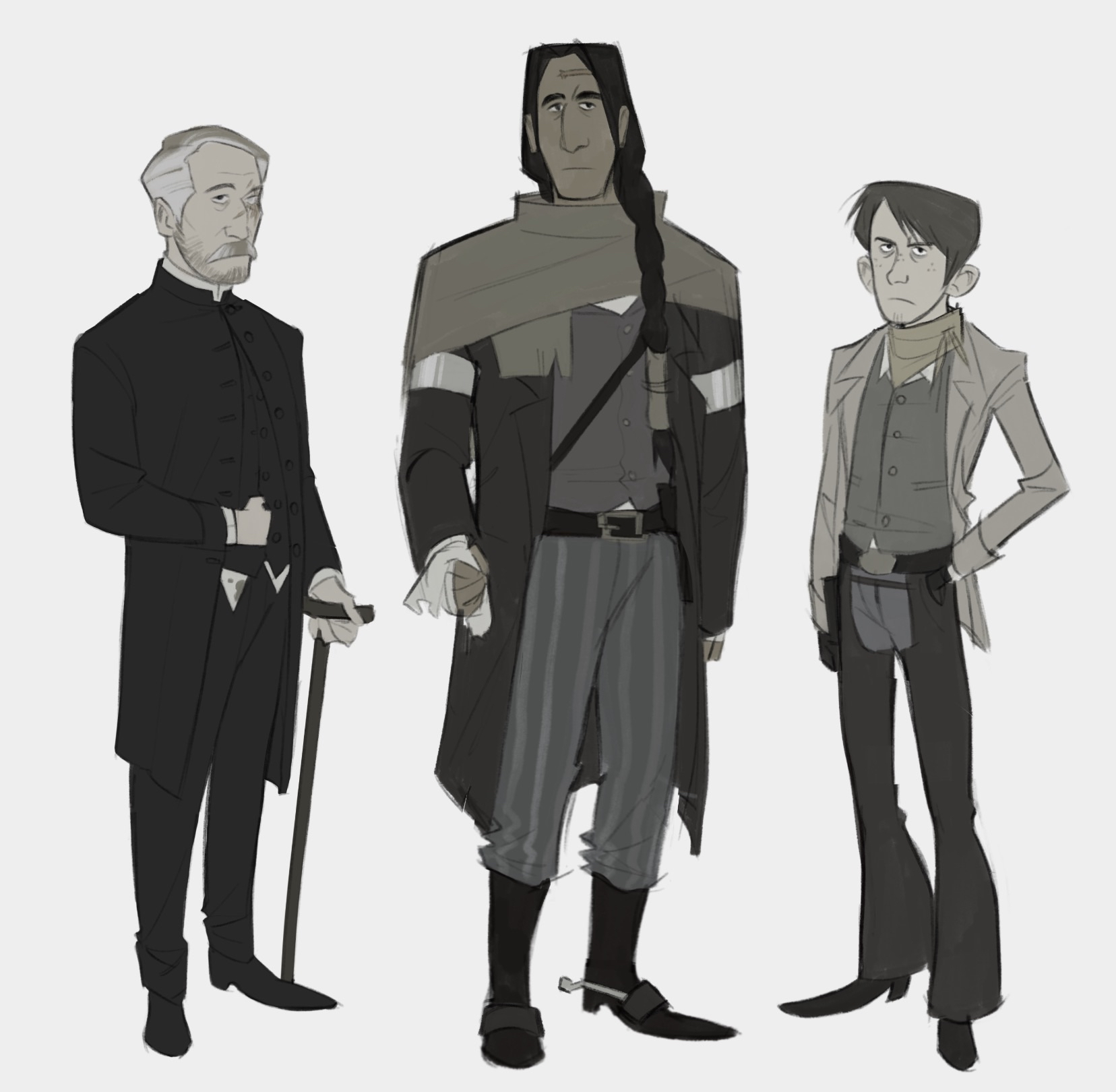
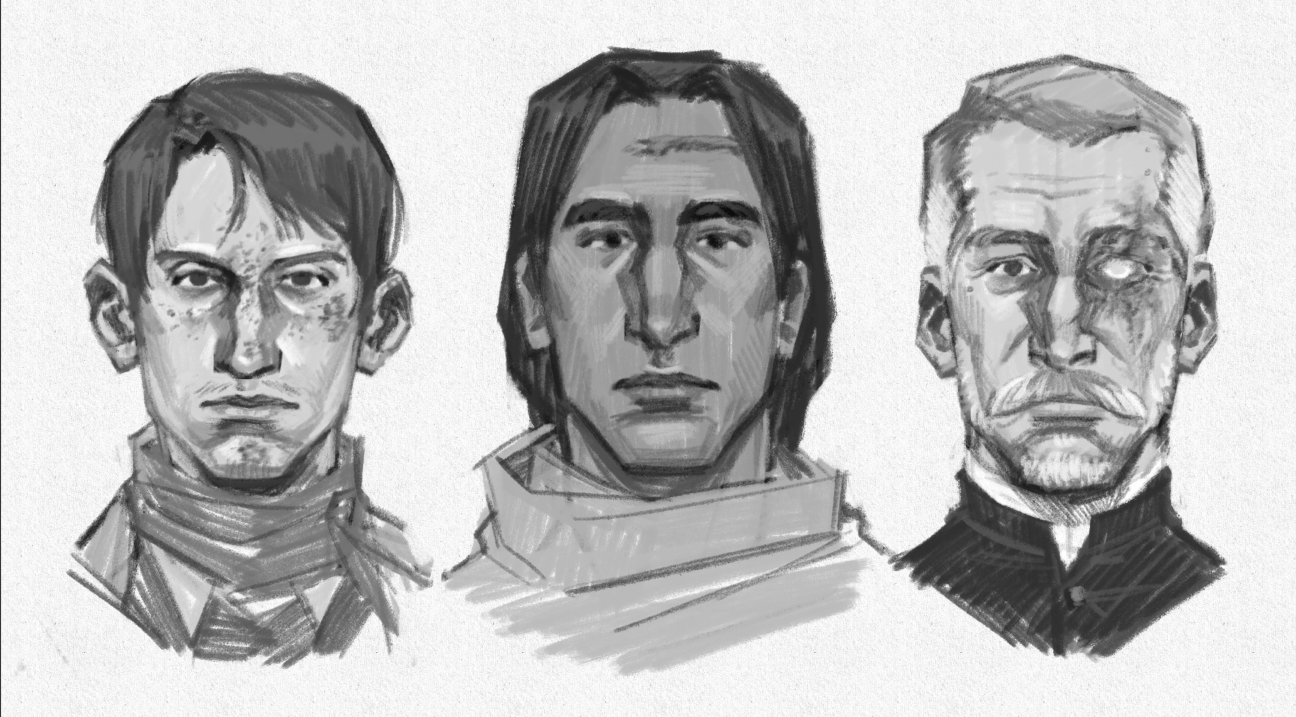
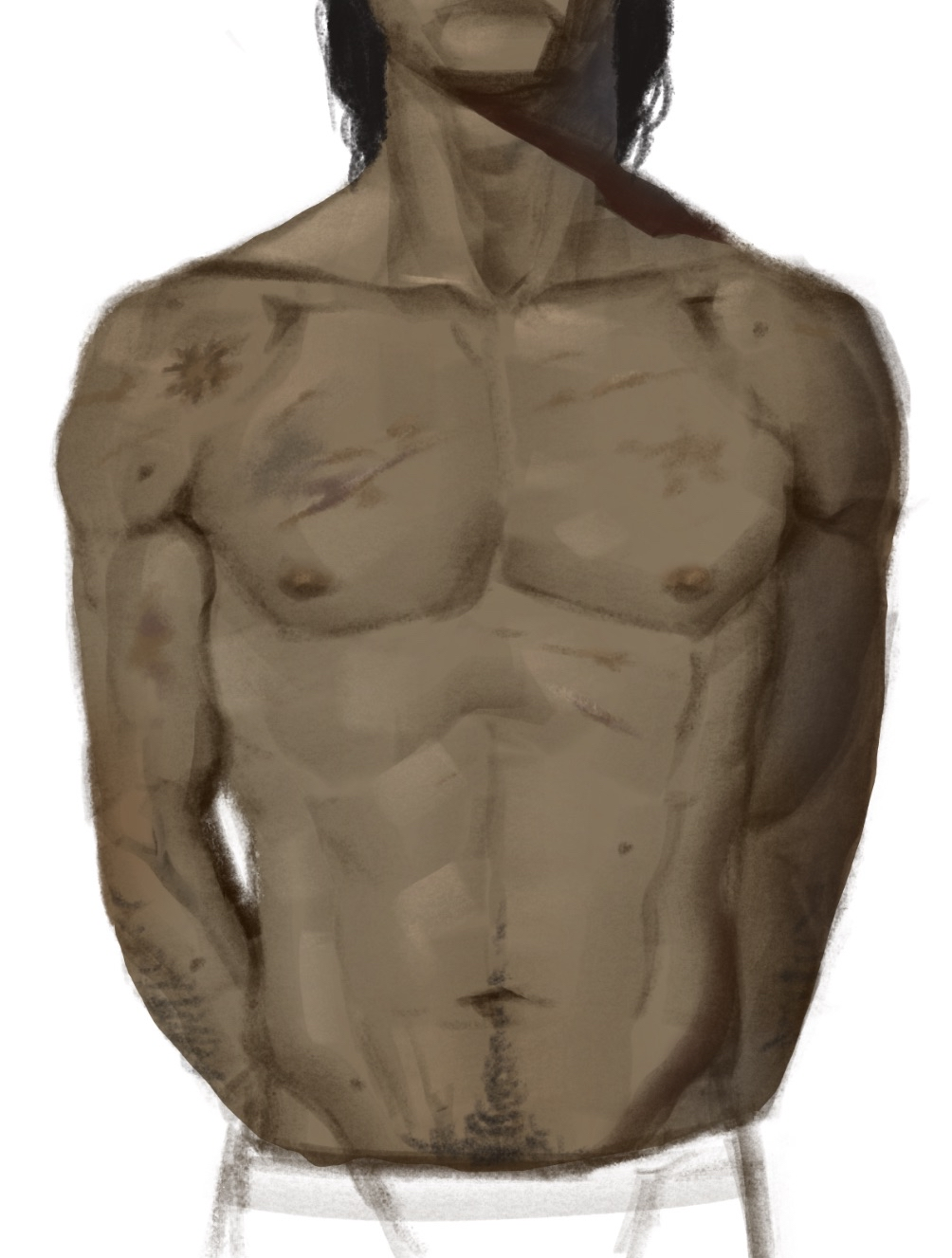
Rawhide is a very tall man, standing at 190 cm (6'2"). He has a sturdy build with broad shoulders. Despite his physical strength, his muscles are not overly defined, as he has relatively even muscle to fat ratio. His skin is tan and his thick, wavy, black hair is reaches down to his lower back. He usually ties it in a single loose braid wrapped at the end in leather. He has a few scattered scars across his chest, as well as a bullet wound scar on his right shoulder.
He has a long rectangular face with strong cheekbones, a square jaw and a prominent, but not wide nose. His eyebrows are thick and bushy, and his eyes are small and hooded. His ears lie flat against his head. A large, outward jutting scar runs across his forehead, reaching a from his left temple to his mid face.
He wears a light leather cape over a dark brown, knee-length coat. Two silver armbands are wrapped around his upper arms. Underneath the coat, he wears a plain white button-up shirt, a reddish-brown vest with gold buttons and wide, blue-grey striped trousers tucked into black boots with silver spurs. His hands are sometimes wrapped in cloth bandages. He has a black gunbelt with a gold buckle around his waist that holds a revolver, a knife in a sheath and ammunition, mostly hidden beneath his coat. He also carries a black satchel.
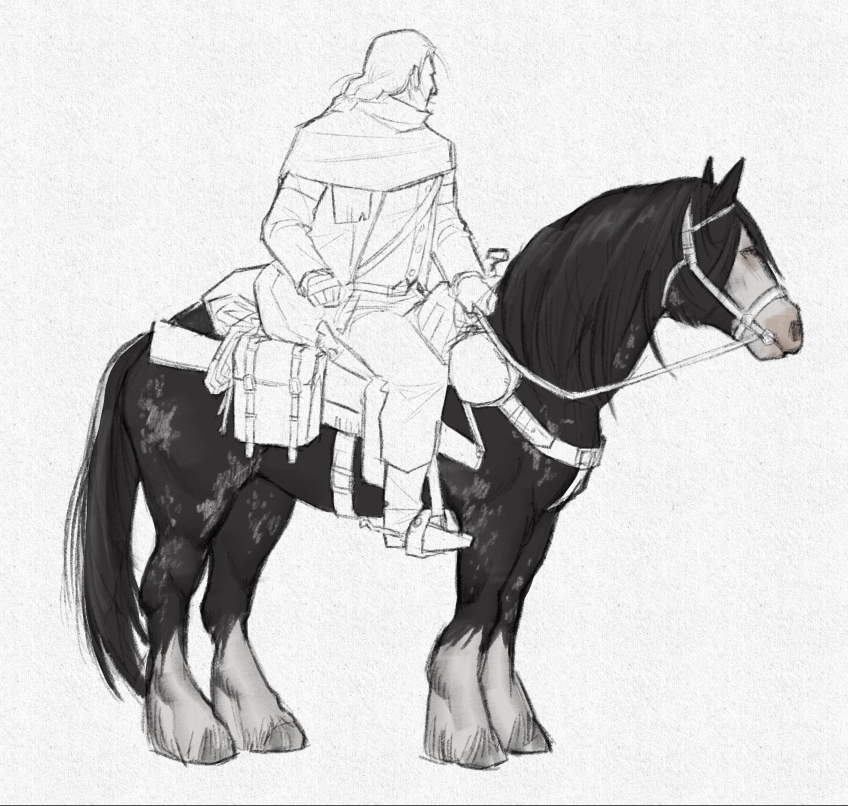
Mount and Weapons
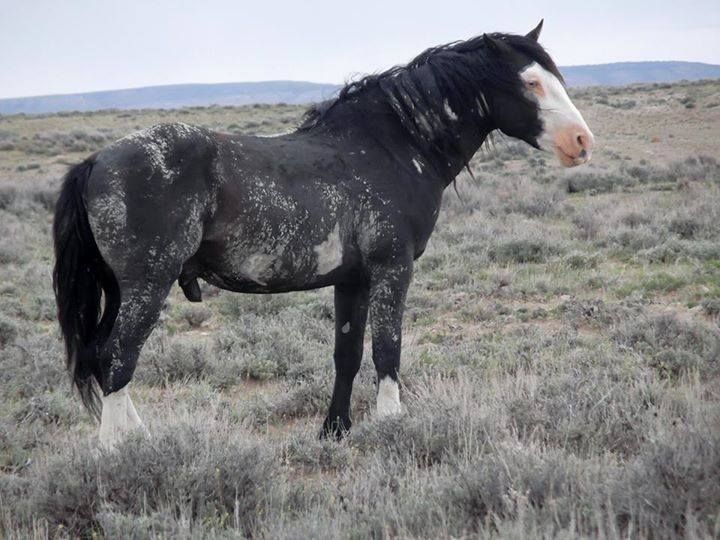
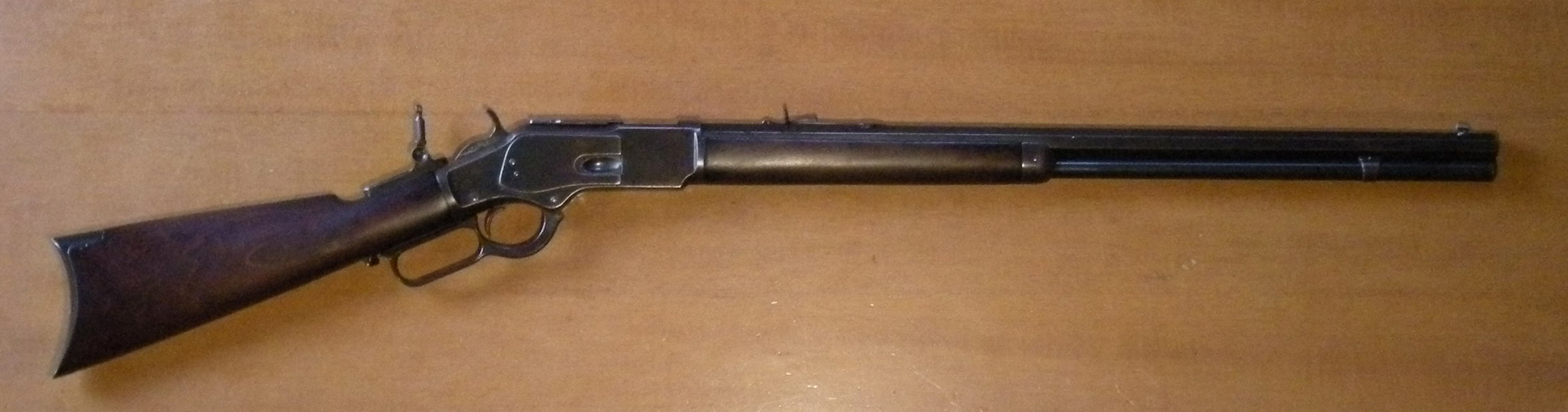
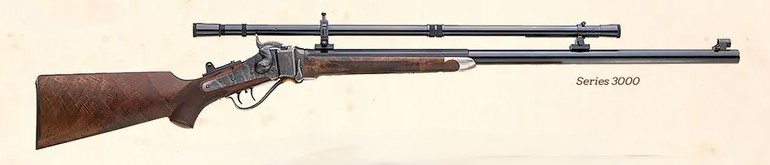
Rawhide frequently carries a Winchester Model 1873 rifle, but also owns a Sharps rifle with a Malcolm scope.
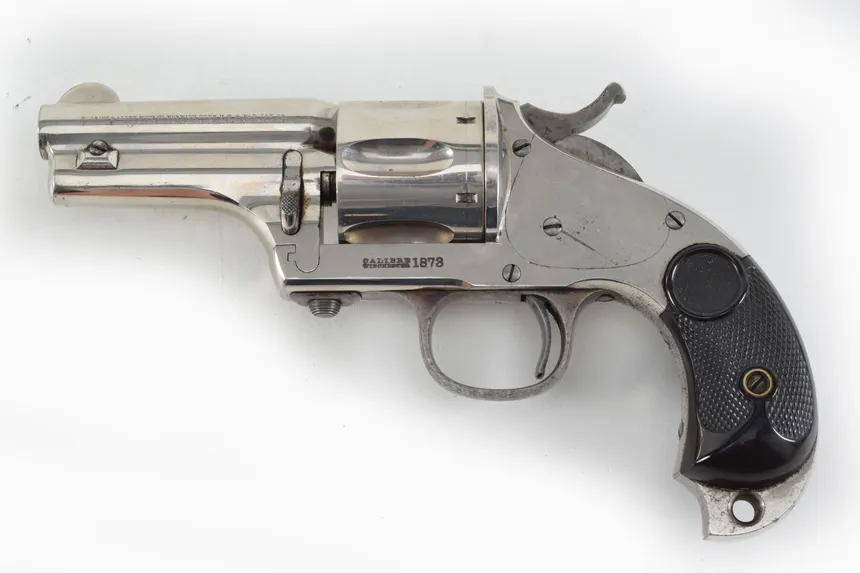
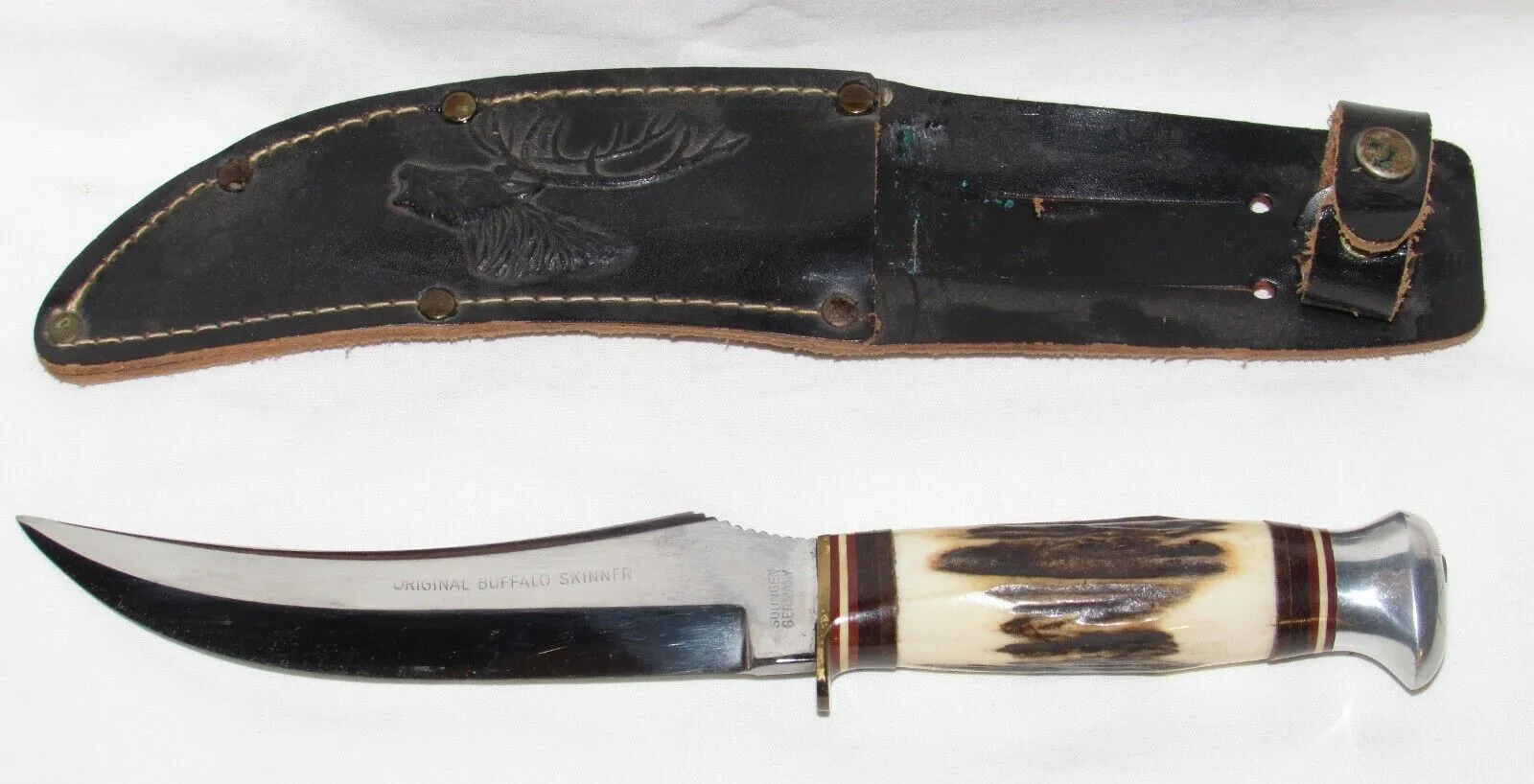
Trivia
Gallery
Reverend Glasseye / Rawhide / Le Lapin
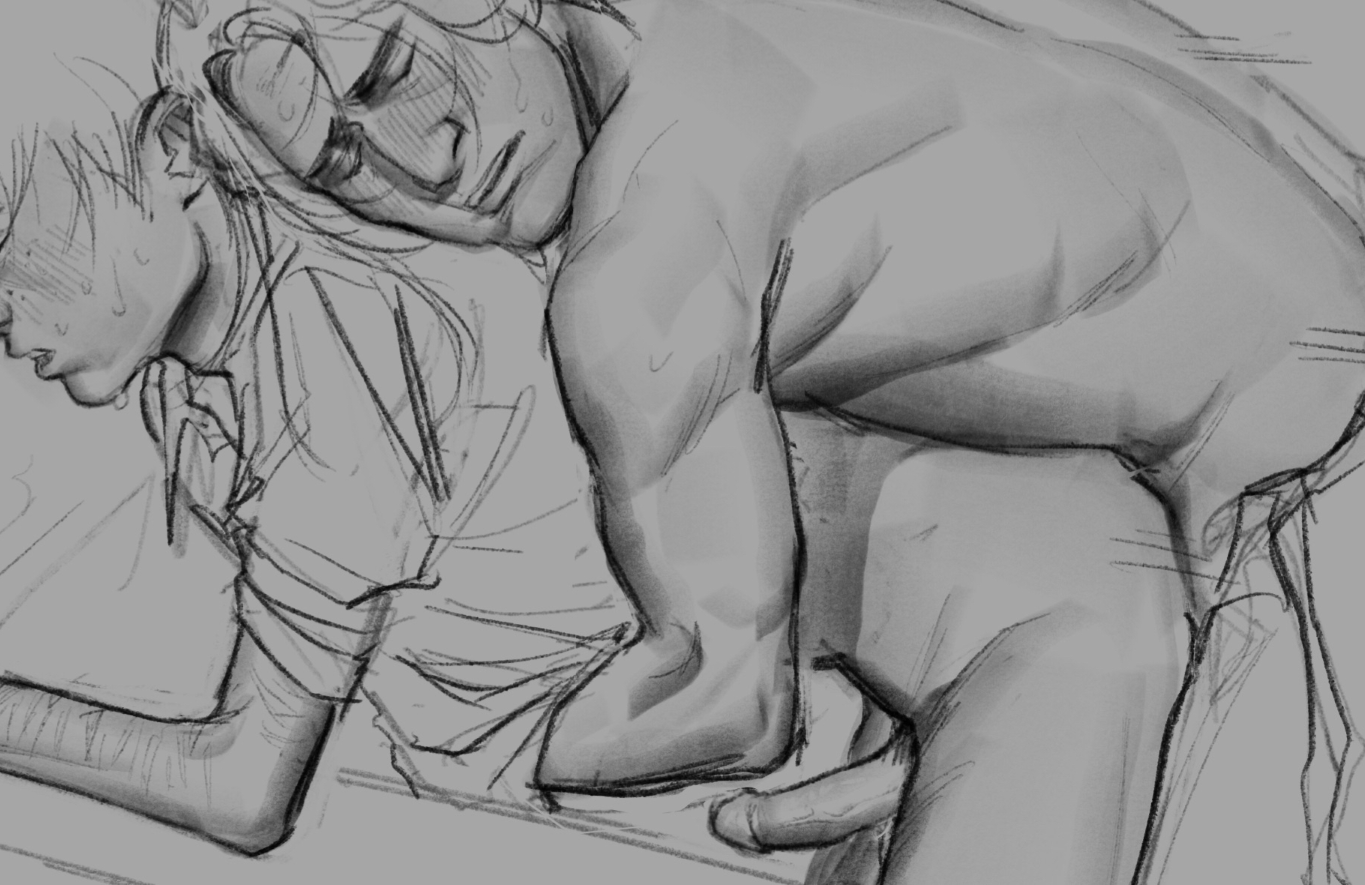
Explicit ⚠
03.01.2026;Le Lapin / Rawhide
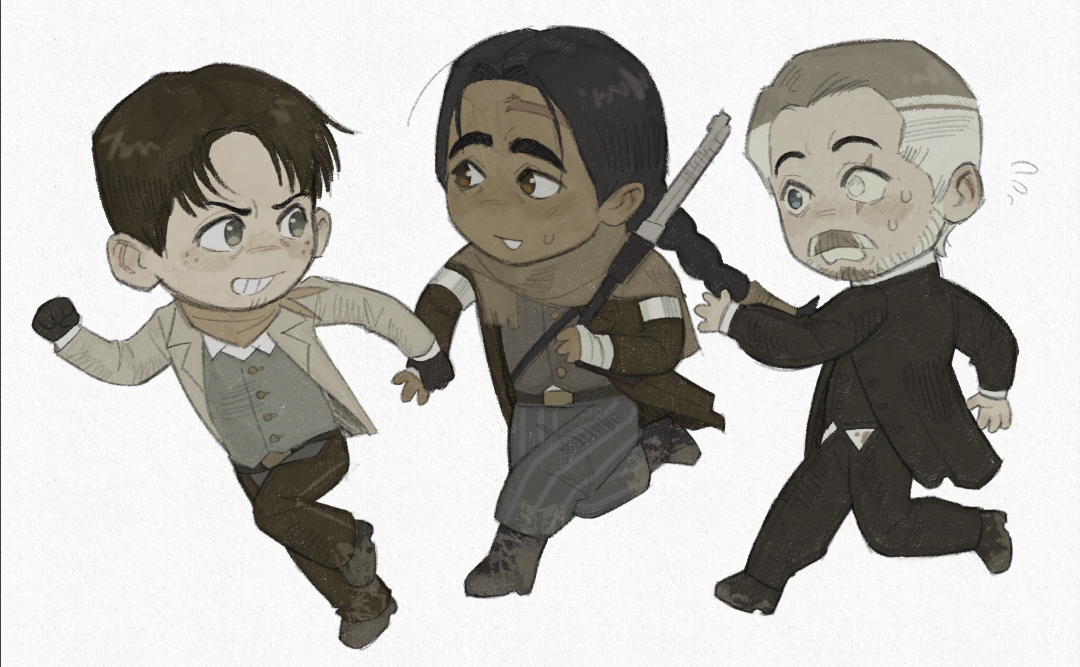
Le Lapin / Rawhide / Reverend Glasseye
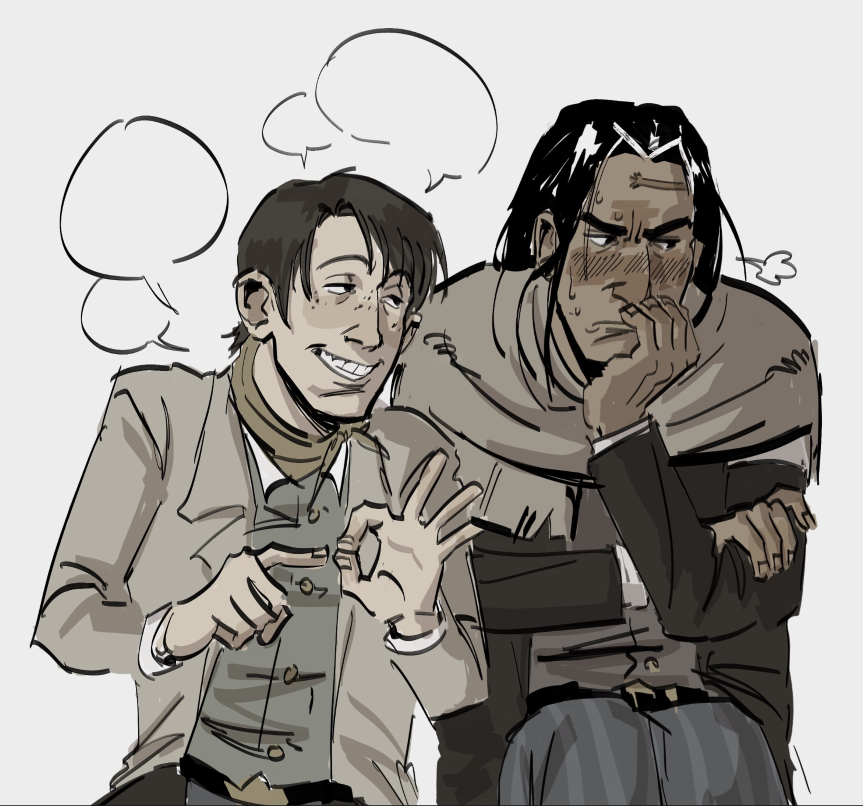
Le Lapin / Rawhide
Rawhide / Arlene
Le Lapin / Rawhide / Reverend Glasseye
Rawhide
Explicit ⚠
10.11.2025;Le Lapin / Rawhide

Explicit ⚠
09.11.2025;Le Lapin / Rawhide
Blood ⚠
26.10.2025;Rawhide